Channels lineRide time 6 minUpdated
Customer acquisition channels for adult brands: which route, in what order
Every channel an adult brand can use comes with its own rulebook: consent law for email, disclosure rules for affiliates, image and wording rules on marketplaces, content policies on ad platforms. This guide takes the channels in the order most brands should build them, with the rule that matters most for each.
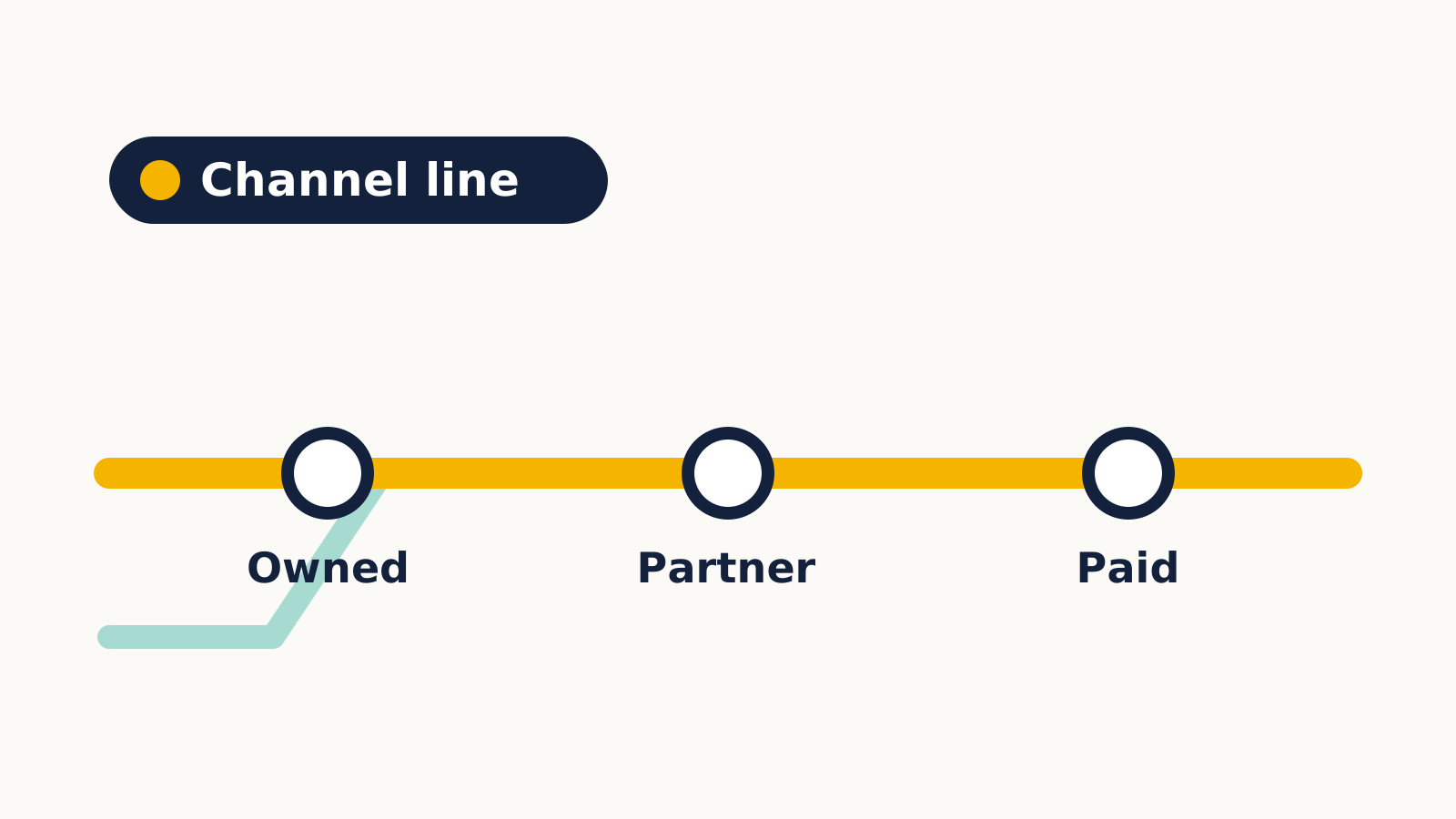
Stop 1Start with what you own
Your site and your email list are the only routes no platform can close. Build them first: a site that converts, and a list growing from consented sign-ups. Every other channel then feeds into something you control. The sign-up stops are laid out in our lead generation funnel guide.
Stop 2Add search early, expect it late
Organic search takes months to pay off, so it belongs near the start of the plan even though it contributes last. Guides that answer real questions, safe for work and clearly written, are what rank and what AI answers quote. Treat it as the slow line that can end up carrying the most passengers.
Stop 3Partners and affiliates
Reviewers, affiliates and partner brands can send warm, ready-to-buy visitors, and they are paid on results. Their rulebook is the FTC's Endorsement Guides: every paid link and sponsored mention needs a clear disclosure, and brands are expected to brief partners and check what they publish. Traffic from this line can be high quality, which our guide to traffic vs qualified leads explains how to confirm.
Stop 4Marketplaces
Marketplaces reach shoppers who would never find a standalone store, at the cost of margin and control. Amazon's adult products policy, updated in July 2022, strictly prohibits explicit sexual imagery in listings and product images, including for sexual wellness products, and Amazon staff advise plain, clinical descriptions. Treat a marketplace as one route among several, and use packaging inserts to invite buyers onto your own list where the marketplace's rules allow it.
Stop 5Paid ads, last and carefully
Mainstream ad platforms restrict sexual content and many adult products, and the rules differ by platform, product and country. Test paid traffic only once the site converts and orders can be traced to their source, and read each platform's policy before spending. The service side of choosing and measuring channels is on customer acquisition.
Stop 6Stop 6: the order depends on your stage
| Stage | Lead channels | Hold back on |
|---|---|---|
| New store, under a year | Own site, email list, a few honest partners, search content started | Paid ads, until the site converts and orders are tracked |
| Growing, steady orders | Search, partners at scale, marketplaces for reach | New channels before the current ones are measured properly |
| Established brand | Retention, brand search, selected paid tests | Discounts that train regulars to wait |
A common mistake is to copy the channel mix of a much larger competitor. Their paid budget works because years of email, search and brand recognition sit underneath it.
Stop 7Stop 7: splitting a budget
An illustrative split for a growing adult store, not a rule: most of the spend on the site, content and email that every other channel depends on; a steady share on partner commissions, paid only on sales; a smaller fixed amount for search content that pays back slowly; and a small test budget for one new channel at a time. Revisit the split every quarter against cost per customer and twelve-month value, and move money toward the lines that keep earning.
Stop 8Stop 8: the risk of one big line
Many adult brands depend on a single channel for most of their sales: one marketplace, one large affiliate, one ad network. Any of them can change its rules, its fees or its mind. If one line brings more than about half of new customers, treat that as a risk to manage, not a success to celebrate. Start building the next line while the first is still strong, and keep every customer you can on your own list, where no platform decides whether you can reach them.
Stop 9Stop 9: seasons and channels
Adult retail has clear peaks: Valentine's Day, the weeks before the end-of-year holidays, and for many brands Pride month in June. Partners and search content need to be in place weeks before each peak, and the welcome emails described in our guide to the lead generation funnel should be refreshed for it; paid tests are best run outside them, when costs are lower and results less distorted. Plan the calendar first, then decide which channel carries each peak.
Stop 10Stop 10: measuring every line the same way
- Tag every link from every channel consistently, so orders can be traced back.
- Count paying customers and their margin by line, not clicks or sign-ups.
- Look at twelve-month value, because some lines bring customers who return and some do not.
- Compare lines on the same months, since seasons change every channel at once.
The economics behind this are set out on customer acquisition, and the difference between visitors and real leads in our guide to traffic vs qualified leads.
Stop 11Stop 11: partners that suit adult brands
Not every partner fits. The ones that tend to work for lawful adult brands are sexual wellness educators and reviewers with engaged audiences, relationship and lifestyle newsletters that write to their own subscribers, and complementary brands, such as a lingerie label and a toy brand, that can introduce each other to customers. Partners who only run coupon pages or buy traffic often claim sales that would have happened anyway. Check where a partner's visitors come from before agreeing commission, using the leak method in our funnel leak analysis to see whether they buy, and pay more for customers who arrive fresh than for those who were already in your checkout.
Stop 12Stop 12: what a first year can look like
An illustrative path, not a promise. In the first quarter, the site converts, its key pages are tuned as described on conversion optimization, and the email list starts growing from a real offer, the kind set out in our guide to first-party audiences. In the second, a handful of partners send steady sales and the first search guides go live. In the third, search begins to bring visitors and the list starts producing repeat orders. In the fourth, one paid test runs against a clear target, and the plan for year two is set from what each line actually returned. Brands that try to run every line from the first month usually end the year with five half-built channels instead of three working ones.
Whatever the order, keep a single page that lists each line, what it cost and what it returned last quarter, and review it with whoever approves the budget. Decisions made from that page tend to be calmer than decisions made from a busy dashboard.
Stop 13Sources and further detail
Reference links to the publishers named in this guide, for anyone who wants the full text.
Last stopQuestions
- 01Can adult products be sold on Amazon?
- Many sexual wellness products can, under Amazon's adult products policy. Listings must avoid explicit sexual imagery, and Amazon staff advise clinical, plain descriptions rather than innuendo.
- 02How many channels should a new brand run at once?
- Two or three done well beats six done badly. A sensible start is your own site and list, then one partner or marketplace route.
- 03When is paid advertising worth trying?
- Once the site converts well and you can measure orders by source. Otherwise restricted, expensive traffic lands on a page that cannot turn it into customers.
- 04How much of our sales should one channel bring?
- There is no fixed rule, but if one channel brings more than about half of new customers, treat it as a risk. Build the next channel while the first is strong, and keep customers on your own list.