Leads lineRide time 6 minUpdated
The adult lead generation funnel, stop by stop
An adult lead generation funnel usually fails quietly at one stop: an offer nobody wants, a form that asks too much, consent wording that will not hold up, or a welcome email that never arrives. This guide rides the line one stop at a time, with benchmarks for where a sign-up form should land.
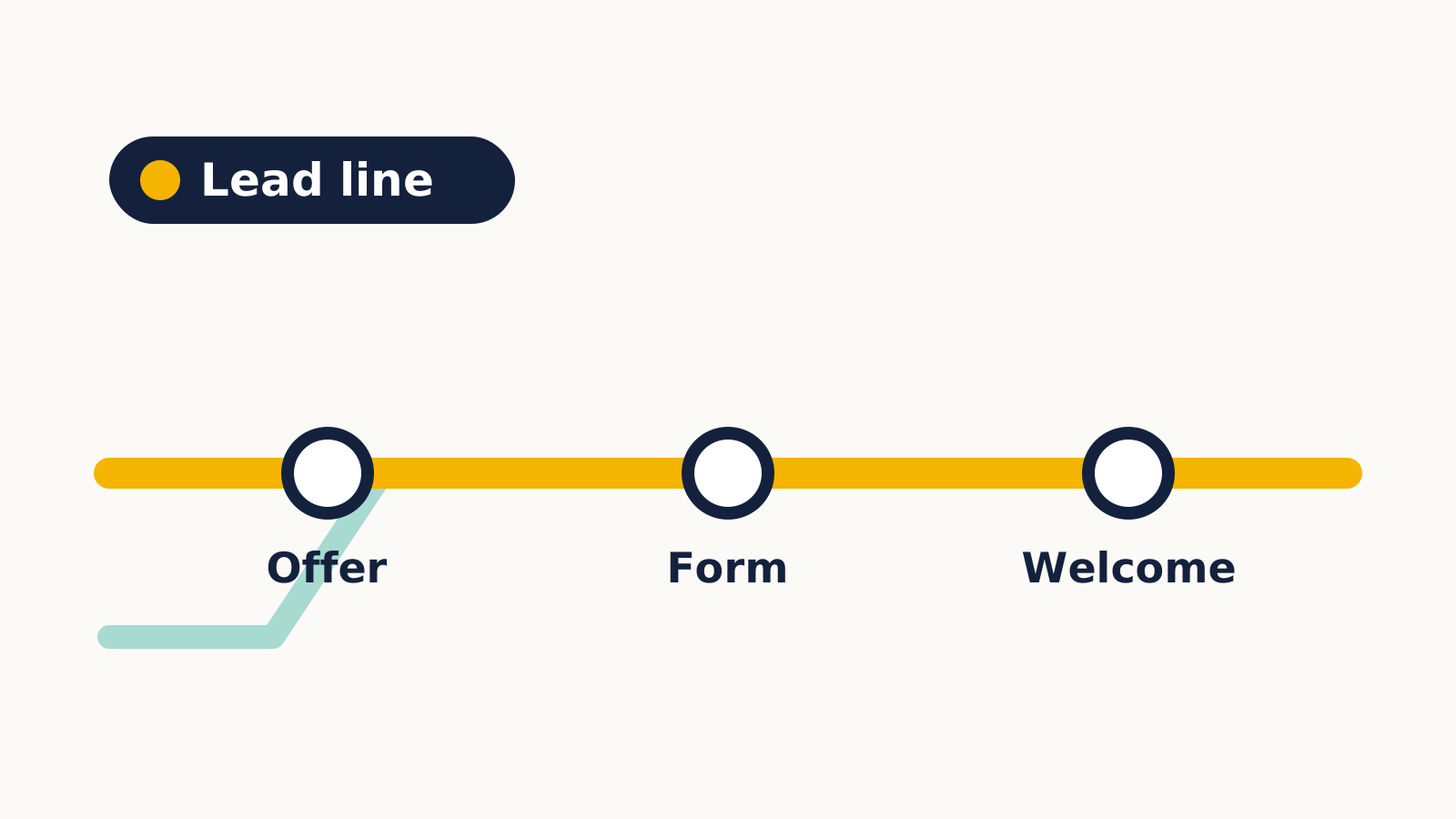
Stop 1The offer
Nobody hands over an email address for "news and updates". The first stop is an offer worth the exchange: a buying guide, a first-order saving, early access to a launch. For adult brands it also has to work in any setting, because the form may appear on a phone in a public place. Plain, safe-for-work wording beats clever innuendo here. Where visitors come from in the first place is mapped in our guide to acquisition channels.
Stop 2The form
Omnisend's analysis of 1.24 billion popup displays in 2025 found an average sign-up rate of 2.1%, with forms shown after a 6 to 10 second delay doing best, and mobile-designed popups converting at 2.2% against 1.4% for desktop-only ones.
- Ask for an email address, and little else, at first.
- Delay the popup a few seconds rather than firing it on arrival.
- Design for the phone first; that is where most visitors are.
- If an age gate is in place, show the form after it, never on top of it.
Stop 3The consent line
The words beside the button decide whether the lead is usable. Say what people will receive and how often, link to the privacy policy, and leave boxes unticked. If you plan to text, collect SMS consent separately with its own clear wording, since the TCPA sets a higher bar for marketing texts. The rules themselves are summarized on lead generation.
Stop 4Confirmation
A short confirmation page or email tells people what happens next and catches mistyped addresses before they damage deliverability. Use it to set expectations: what the emails will look like, that subject lines stay discreet, and how to leave at any time.
Stop 5The first welcome email
The welcome email is often among the most-opened messages a list sends, so it should deliver the offer at once and answer the questions that stop a first order: how the package arrives, how the charge appears, how returns work. The rest of the sequence belongs to the marketing funnel, and leaks along the way are traced in our guide to funnel leak analysis.
Stop 6Stop 6: the second and third emails
Most welcome sequences spend all their effort on the first message and then fall silent. The second and third emails are where a curious sign-up becomes a buyer. A good second email answers the doubt that stops a first order, such as how discreet delivery works or what to choose as a beginner. A good third email shows the product in use, through a care guide, a short comparison or honest reviews, and repeats the offer with a clear end date. Space them a day or two apart; people who signed up today are most receptive this week.
Stop 7Stop 7: measuring the route
| Between these stops | What to watch |
|---|---|
| Visit and form view | Whether the form appears to the right people at the right time |
| Form view and sign-up | Whether the offer is worth an email address |
| Sign-up and confirmation | How many addresses are real and wanted |
| Confirmation and first order | Whether the welcome sequence does its job |
Look at each gap by traffic source. A partner who sends many sign-ups and few first orders is sending curious visitors, not buyers, a pattern set out in our guide to traffic vs qualified leads.
Stop 8Stop 8: keeping the list healthy
A list grows best when it is also pruned. Remove addresses that bounce, stop sending to people who have not opened anything in several months after one last check-in, and make leaving easy. Mailbox providers watch how people treat your messages; a smaller list that opens and buys protects delivery for everyone on it. The technical requirements senders now face are summarized on lead generation.
Stop 9Stop 9: a quick audit of your own funnel
- Sign up on your own site, on a phone, as a new visitor would.
- Time how long the welcome email takes to arrive, and check where it lands: inbox, promotions or spam.
- Read the subject line and preview text as someone sharing the screen would see them.
- Count the clicks from the welcome email to a completed first order.
Most brands find at least one surprise in ten minutes: a slow email, a broken link, or an offer that expired months ago.
Stop 10Stop 10: offers that suit adult brands
Some offers work better for intimate products than for most categories. A short product finder, asking a few safe-for-work questions about experience and preferences, gives the shopper a useful answer and gives you a consented sign-up with context. A free care or beginner's guide answers the questions people are shy to ask in person. A first-order saving works, but it attracts bargain hunters as well as buyers, so pair it with a minimum spend or a short expiry. Whatever the offer, deliver it at once; a promised discount that arrives an hour later loses much of its pull. Test the offer itself before polishing the form around it, since a better offer usually moves sign-ups more than any change of color or wording.
Stop 11Stop 11: what to leave out of the route
- Pre-ticked consent boxes, which do not record real consent.
- Popups that fire before the age gate or cover the page on phones.
- Explicit images in the form, the confirmation page or the first email.
- Bought or rented lists, which bring complaints and no proof of consent.
Each of these can raise sign-up numbers for a week and damage delivery and trust for much longer.
Stop 12Stop 12: when to change the route
A funnel that worked last year can quietly decay. Offers age, competitors copy them, and audiences shift between channels. Review the whole route every quarter: the offer, the form, the consent wording, the confirmation and the first three emails. Change one stop at a time and give each change enough weeks to show its effect, so you know which change made the difference. Keep a short dated log of every change and its result; after a year it becomes the most useful document your team has about its own audience. Seasonal peaks such as Valentine's Day, Pride month in June and the end-of-year holidays are good moments to try a new offer, because traffic is high, and poor moments to change several things at once, because you will not know what worked.
Last stopQuestions
- 01What sign-up rate should a popup reach?
- Omnisend's 2025 data across 1.24 billion popup displays puts the average at 2.1%. Its own guide treats under 1.5% as weak, 3 to 5% as good and above 5% as excellent.
- 02Should we use double opt-in?
- It is not required for US email, but a confirmation step keeps typos and fake addresses off the list, which protects deliverability. That alone makes it worth considering.
- 03How many fields should a sign-up form have?
- As few as the offer needs. Email alone is usually enough to start; ask for more later, once the relationship is established.
- 04How many emails should a welcome sequence have?
- Usually three to five over the first week or two: the offer, the answer to the main doubt, the product in use, and a reminder before the offer ends. Fewer is fine if each one earns its place.